Comprehensive LLM Benchmarking for Financial Automation Tasks
ramp · Finance · 2026 · source Agentic: yes · promotional bias: low · source-backed · extracted with prompt 0.5.5 (schema v2)
Generated from extraction.json — do not edit by hand. Every claim cites verbatim source evidence; stated means the quote directly asserts the claim, implied means it supports it indirectly.
Problem
Domain: Model benchmarking for financial automation and agent workflows
Ramp needed a production-oriented benchmark framework to choose LLMs for financial tasks where accuracy, cost, latency, compliance risk, human review burden, and customer experience vary by use case.
Constraints:
- No single model dominates every financial workflow.
- Financial automation tasks have different failure costs, such as false negatives in compliance versus latency in autocoding.
- Some tasks lack clean ground truth because human reviewers can be inconsistent or corrections are not always made.
- Benchmarks need real production data and task-specific metrics rather than generic model rankings.
Architecture
Ramp built a multi-task LLM benchmarking framework over financial automation workflows including contextual invoice OCR, financial statement OCR, policy-agent decisions, accounting autocoding, partner-restriction compliance, and fund smart routing. The framework compares models and reasoning variants on task-specific metrics, cost, latency, Pareto frontiers, human review tradeoffs, and failure-mode tolerances, using real customer documents, operator transcriptions, historical patterns, compliance categories, and curated routing datasets.
Diagram confidence: reconstructed (reconstructed from prose).
flowchart LR
  benchmark-task-registry["benchmark task registry"] --> model-evaluation-runner["model evaluation runner"]
  benchmark-task-registry --> production-task-datasets["production task datasets"]
  production-task-datasets --> ground-truth-labels["ground truth labels"]
  ground-truth-labels --> model-evaluation-runner
  model-provider-candidates["model provider candidates"] --> model-evaluation-runner
  model-evaluation-runner --> task-metric-calculators["task metric calculators"]
  task-metric-calculators --> pareto-frontier-analyzer["pareto frontier analyzer"]
  pareto-frontier-analyzer --> model-selection-decision["model selection decision"]
  model-selection-decision --> financial-automation-products["financial automation products"]
  financial-automation-products --> human-review-path["human review path"]
  tool-grounding-path["tool grounding path"] --> model-evaluation-runner
  tool-grounding-path --> financial-automation-products
Components
| Component | Role | Interacts with |
|---|---|---|
benchmark task registry |
Defines the financial automation tasks, datasets, and metric of interest for each benchmark. | model evaluation runner, production task datasets |
production task datasets |
Real invoices, P&L documents, expense-policy transactions, compliance examples, and smart-routing samples. | benchmark task registry, ground truth labels |
ground truth labels |
Final submitted bills, risk-operator transcriptions, human decisions, curated funds, and compliance labels used for scoring. | production task datasets, model evaluation runner |
model evaluation runner |
Executes models and reasoning variants against task datasets. | benchmark task registry, model provider candidates, ground truth labels, task metric calculators |
model provider candidates |
Anthropic, Google, OpenAI, and open-weight models being evaluated. | model evaluation runner |
task metric calculators |
Computes perfect extraction rate, match rate, disagreement/unsure rate, accuracy@K, compliance adherence, and override rate. | model evaluation runner, pareto frontier analyzer |
pareto frontier analyzer |
Compares tradeoffs such as accuracy versus cost, false positives versus false negatives, and cost/latency versus quality. | task metric calculators, model selection decision |
model selection decision |
Chooses the model or operating point per financial workflow based on the task's risk and customer-experience priorities. | pareto frontier analyzer, financial automation products |
financial automation products |
Ramp product surfaces such as Accounts Payable, risk/underwriting, policy review, accounting, compliance, and smart routing. | model selection decision |
human review path |
Receives policy or routing cases when model uncertainty or incorrect routing requires human handling. | financial automation products |
tool grounding path |
Adds external tools such as web search for smart-routing improvements. | model evaluation runner, financial automation products |
Data flow
For each production task, Ramp defines a task-specific dataset and metric, runs competing model/provider/reasoning variants, computes performance, cost, latency, and frontier tradeoffs, then uses the benchmark result to pick the model or operating point that best fits customer experience and risk constraints. Some tasks use extracted document values, some compare model decisions to humans, and agentic tasks route uncertain cases to human review or use web search/tool grounding when it improves outcomes.
3 supporting quotes
Why this architecture
Ramp benchmarks by task and Pareto tradeoff because customer-facing financial workflows need different balances of precision, coverage, latency, cost, human review, and compliance safety.
3 supporting quotes
Models used: Gemini 3 Flash · Gemini 2.5 Flash · Gemini 3 Pro · Gemini 3.1 Pro · Claude Opus 4.6 · Claude Opus 4.5 · Claude Sonnet 4.6 · Claude Haiku 4.5 · GPT-5.1 · GPT-5.2 · GPT-5.4 · GPT-5 mini · GPT-4.1 · Kimi K2.5 · Minimax 2.5 · GLM 5
Scale
- Ramp benchmarks common financial-professional tasks used in its products.“common tasks performed by financial professionals.”article, stated
- Invoice OCR handles invoices that can be hundreds of pages long.“Customers leveraging Ramp's Accounts Payable software upload invoices (which can be hundreds of pages long)”article, stated
- Financial statement OCR used over 500 real P&L documents.“We benchmarked 13 models on over 500 real P&L documents”article, stated
- Contextual invoice OCR compared cost down to less than one-third of another high-performing variant.“at less than 1/3rd the cost.”article, stated
- Financial statement evaluation uses 1%, 5%, and 10% error thresholds.“match rate at a 1% relative error threshold per value extracted, with a secondary analysis at 5% and 10% error thresholds”article, stated
- Autocoding runs across multiple categories for every transaction at different lifecycle points.“autocoding runs across multiple categories for every transaction Ramp processes at different points in the transaction's lifecycle.”article, stated
Alternatives considered (roads not taken)
Choose one overall best model
Rejected because: Ramp found different models have application-specific strengths once task, cost, latency, and failure mode are considered.
Classic OCR benchmark metrics for invoice extraction
Rejected because: Ramp's invoice extraction needs contextual and adaptive user-preference behavior, not just reading difficult images.
Compare policy-agent output only to human decisions
Rejected because: Human policy decisions can have blind spots and subjective interpretations, so Ramp decomposes the goal into disagreement and unsure rates.
Optimize only for low disagreement in policy review
Rejected because: A model could simply say unsure most of the time, reducing disagreement while providing little customer value.
Use more reasoning for every task
Rejected because: Smart routing results did not improve with more reasoning, so Ramp prioritizes cost, latency, and tool grounding there.
Patterns
eval-driven-development (evaluation)
Ramp uses continuous benchmarks to preserve iteration velocity while maintaining trust and reliability.
model-routing (model-selection)
Different financial workflows select different models based on task-specific strengths and constraints.
cost-aware-routing (optimization)
The benchmarks explicitly compare accuracy with cost and latency to choose practical model deployments.
confidence-thresholding (decision-routing)
The policy agent can output unsure and forward expenses to human review when it lacks required context.
human-in-the-loop-gate (risk-control)
Uncertain policy decisions and incorrect smart-routing cases are framed around human review or user override burden.
tool-use-orchestration (agent-grounding)
Smart routing improves when models are augmented with appropriate tools such as web search.
Tradeoffs
Use Pareto frontiers for model selection.
Chose Task-specific frontier analysis over Single aggregate score.
Rationale: Financial workflows need explicit tradeoffs between accuracy, cost, latency, false positives, false negatives, and human review burden.
Use Perfect Extraction Rate for invoice OCR.
Chose Percentage of invoices with zero edits required over Partial field-level OCR accuracy alone.
Rationale: Ramp cares whether every extracted field matches the user's final submitted bill without edits.
Use multiple financial statement tolerances.
Chose 1%, 5%, and 10% relative-error analysis over One strict match-rate number.
Rationale: The tolerance sweep reveals whether wrong answers are small misses or large misses.
Prioritize cost and latency for smart routing.
Chose Cost/latency plus tool augmentation over More reasoning compute.
Rationale: The benchmark found more reasoning did not improve smart routing, while web search helped.
Gotchas (what bit them)
Task-level model rankings can invert under different tolerances.
Root cause: Some models make fewer small errors while others limit large misses, so a single metric hides failure-mode shape.
Resolution: Evaluate at multiple error thresholds and inspect provider failure modes.
Policy-agent evaluation lacks clean ground truth.
Root cause: Human reviewers have individual blind spots and policy interpretations.
Resolution: Use disagreement rate and unsure rate as opposing metrics and choose a Pareto operating point.
A model can appear safe by sending too much to human review.
Root cause: The unsure option reduces disagreement but can erase customer value if overused.
Resolution: Benchmark disagreement rate against unsure rate rather than either metric alone.
Compliance false negatives are more dangerous than false positives.
Root cause: A miss can onboard a prohibited business, while too many false positives create operational burden.
Resolution: Score restricted-business detection, category coverage, and false positives together.
Accounting autocoding has cold-start and changing-pattern failure modes.
Root cause: Categories can be semantically similar, historical examples may be absent, and new categories appear as companies grow.
Resolution: Evaluate adherence to historical patterns and semantic reasoning under cold-start and pattern-change conditions.
Evaluation
Ramp evaluates models on six financial automation tasks with task-specific metrics, real production-derived data, multiple reasoning variants, and Pareto analysis over accuracy, cost, latency, false positives, false negatives, uncertainty, and override burden.
Metrics: Perfect Extraction Rate · Match Rate within 1% of ground truth · 5% and 10% relative error tolerance analysis · Disagreement Rate · Unsure Rate · Accuracy@K, K=1 · Top-3 accuracy · Compliance Adherence Score · Override Rate · cost per request · latency
5 supporting quotes
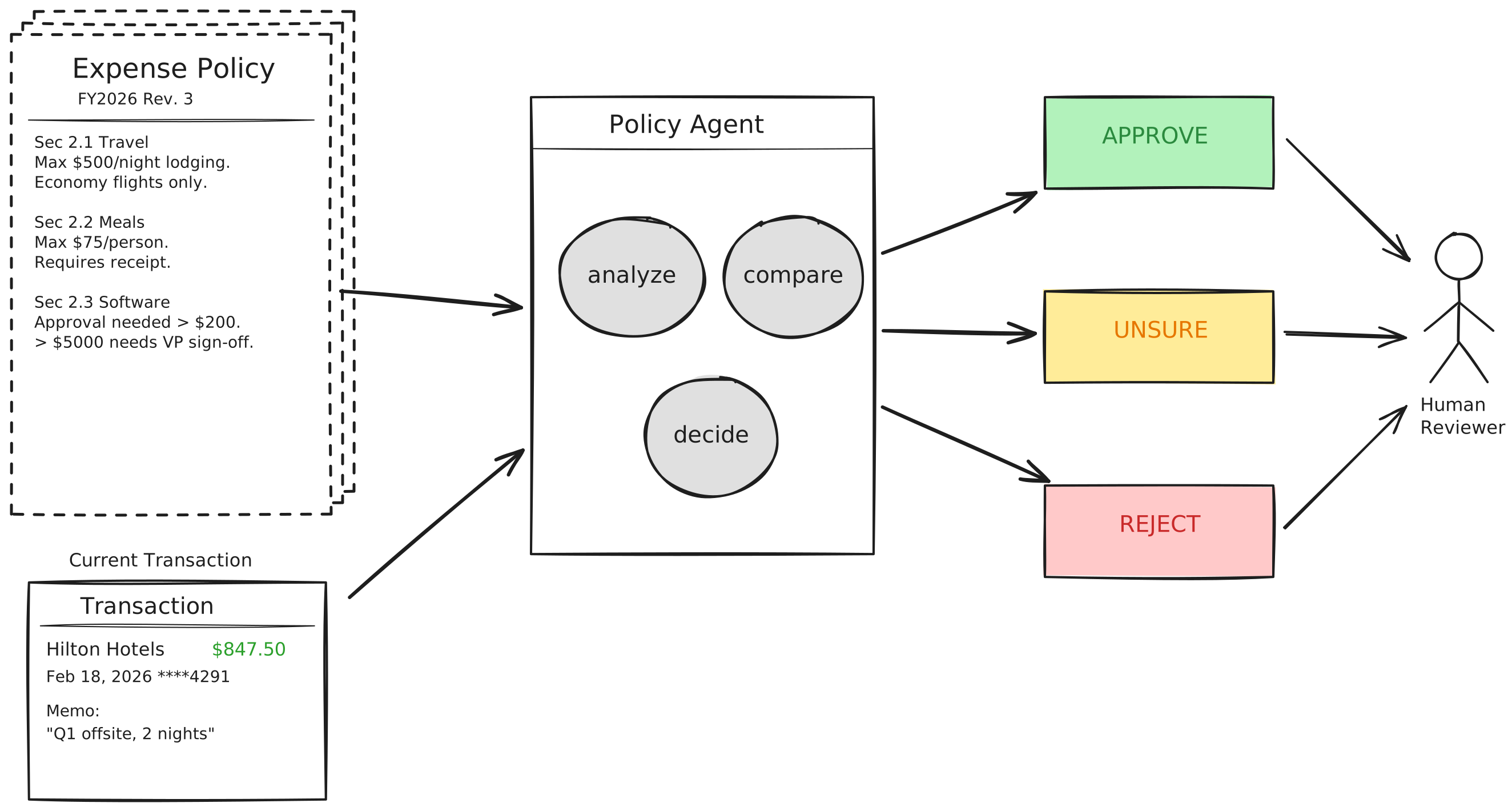 Metrics of interest: Disagreement Rate, Unsure Rate Reviewing expenses to determine whether they are in policy is a painstakingly manual process that's often overwhelming and”article, stated
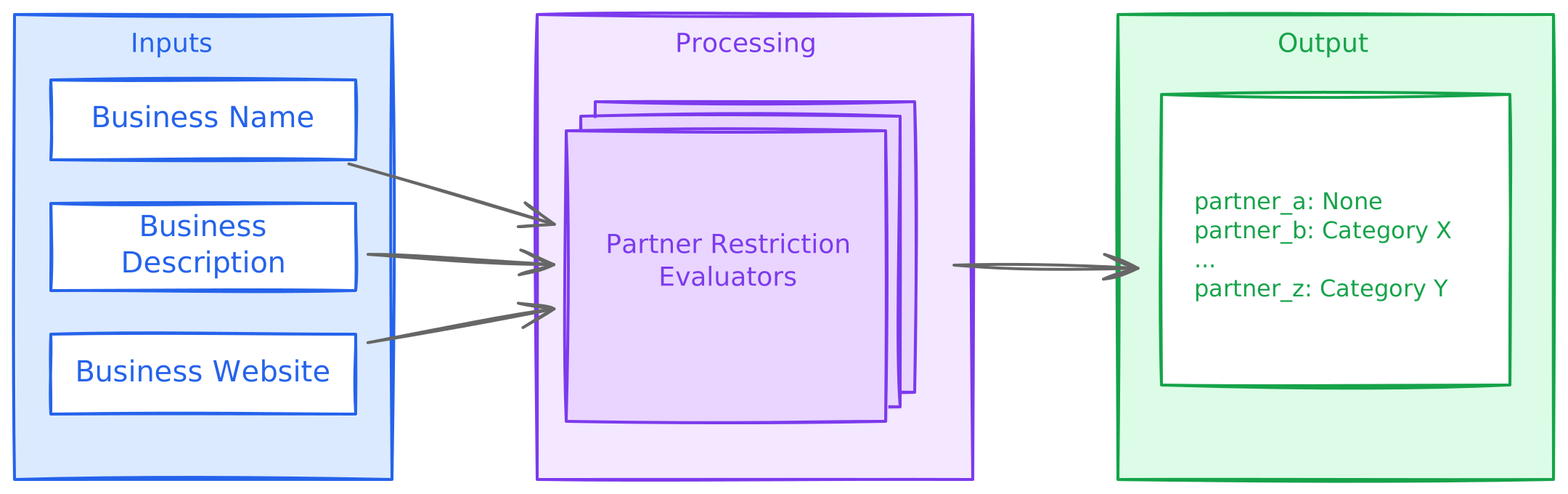 Metric of interest: Compliance Adherence Score Partnerships with banks, lenders, and other financial institutions enable many of Ramp's core offerings from [Card](https:”article, stated
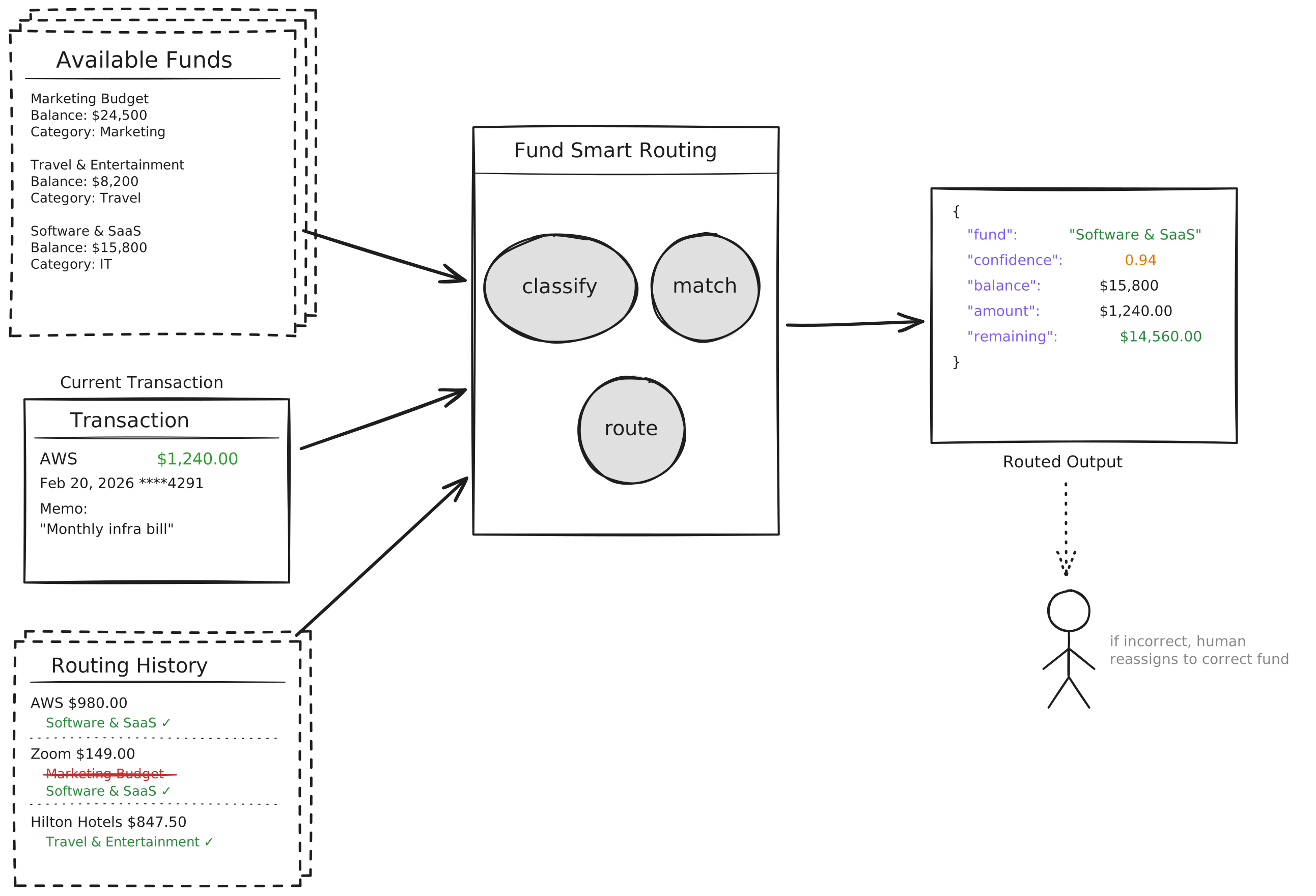 Metric of interest: Override Rate Smart routing empowers an LLM agent to choose the most appropriate fund to route a transaction to, augmenting it with information about the”article, stated
Outcomes
- Gemini 3 Flash performed strongly on visual/document extraction tasks with favorable cost efficiency.
- Claude Opus 4.6 remained the overall-intelligence leader in the source's conclusion.
- Different models were preferred for different financial workflows depending on task constraints.
- Web search grounding improved smart-routing agent performance across models.
The source reports benchmarking 13 models on over 500 real P&L documents, invoices that can be hundreds of pages long, task-level cost comparisons such as less than one-third or roughly one-quarter cost, and transaction-level routing/autocoding contexts.